AI & Communication
Language & Communication
Communication is the basis of every learning and is the outline for meaningful connections by which interactions are used.
Students with Autism Spectrum Disorder (ASD) have difficulties not only with understanding language and expressing that language from their communication needs, thoughts and emotions; sometimes they have great challenges with expressing themselves, so it was interesting to learn that students with autism understand communication better when certain supports are used. Evidence-based supports and interventions include visual supports (vs), Picture Exchange Communication systems (pecs), video modelling, and social interaction. Communication is more than just speech; it is about accessibility of the language.
Strategies to Improve Communication
- Visual supports – cue cards, visual schedules, and emotion symbols to reinforce verbal information.
- Social stories and videos to demonstrate appropriate conversational patterns, turn-taking, and nonverbal cues.
- Structured role-play and guided peer interactions to practice initiating and responding to communication in a safe environment.
- AAC tools (Augmentative and Alternative Communication), such as speech-to-text or tablet-based apps, to assist with expression when verbal communication becomes challenging.
- Teacher prompts and reinforcement, providing immediate feedback to encourage communication attempts and build confidence.
These approaches will create a consistent and supportive environment where they can practice language purposefully and gain confidence in expressing themselves. Over time, progress can be measured by his ability to independently initiate communication, maintain short exchanges, and use strategies like gestures or visual aids to clarify meaning.
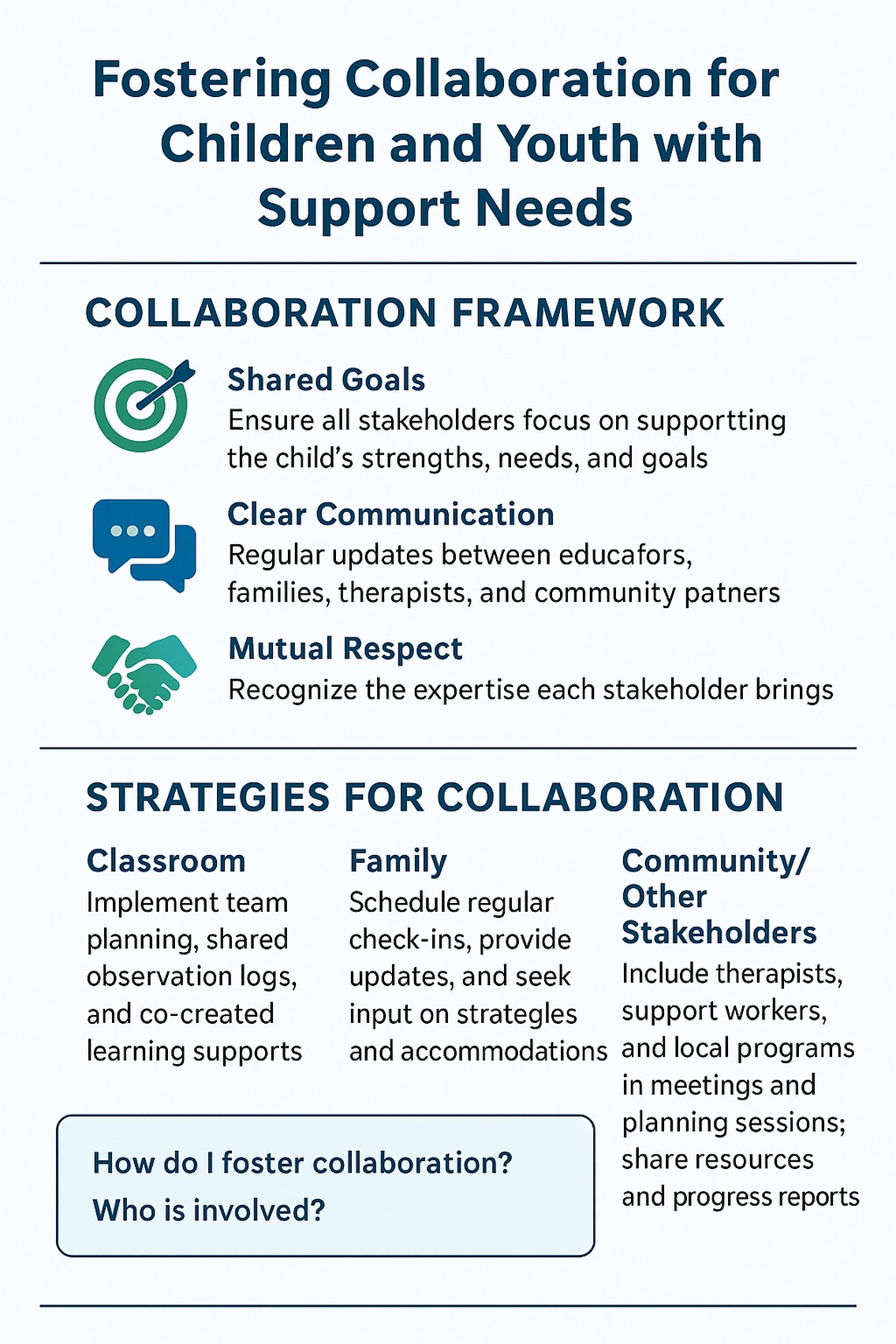
These types of support should be started in the home, school and within the community. A multidisciplinary approach is needed as each team member has their own set of skills which can benefit a student with ASD.
AI, Artificial Intelligence
A student with ASD can greatly benefit from AI by turning their speech to written text, and it can also give them games and other learning tools on an iPad or Tablet. AI is an excellent tool to assist with communication, such as pictures and symbols can build sentences, and by using social robots, they can provide patient and non-judgmental interaction for students to practice communication skills.
AAC, Alternative and Augmentative Communication apps, can utilize AI to help autistic children with limited or no verbal language to communicate. Other AAC tools can use eye-gaze tracking, which allows children to select phrases by holding their gaze on them when the app speaks aloud.
I think robots with AI are fantastic for a child with autism, as they can engage children in a consistent, non-judgmental and predictable way. Social robots can exhibit human-like behaviours like facial expressions and eye contact to help children practice social skills. For their support system, educators and therapists AI can analyze data from behavioural observations and interactions to give the educators valuable insights into the child’s strengths and needs. It also allows for personalized instruction and efficiency, such as creating communication aids… AI is a wonderful tool that any child should use.
This article, Cooking Up Communication – a Recipe for Using AI to support AAC, is backed by evidence-based research, Sennott et. Al (2016) highlighted AI offers significant gains in vocabulary, and a systematic review by Hopcan et al (2023) highlights AI in special education enhances learning and communication for students with disabilities.